Watching a fare by refreshing the search page every few days is a bad use of your attention, and it almost never catches the moment a price actually drops. Fares move at odd hours, sales appear and vanish inside a day, and the good price you saw on Tuesday is often gone by the time you look again on Friday. Price alerts fix this by flipping the job around: instead of you checking the fare, the fare checks in with you.
Here's the takeaway up front: a fare alert is only as good as the route and settings you give it. Point it at a specific trip you genuinely intend to take, tune it so only meaningful drops reach your inbox, and decide in advance what price would make you book. Set up that way, alerts turn cheap-flight hunting from a chore into a background process that pings you when it's time to act — and stays quiet otherwise. This piece builds on the fundamentals in our guide to finding cheap flights; think of alerts as the automation layer on top of those tactics.
What a flight price alert actually is
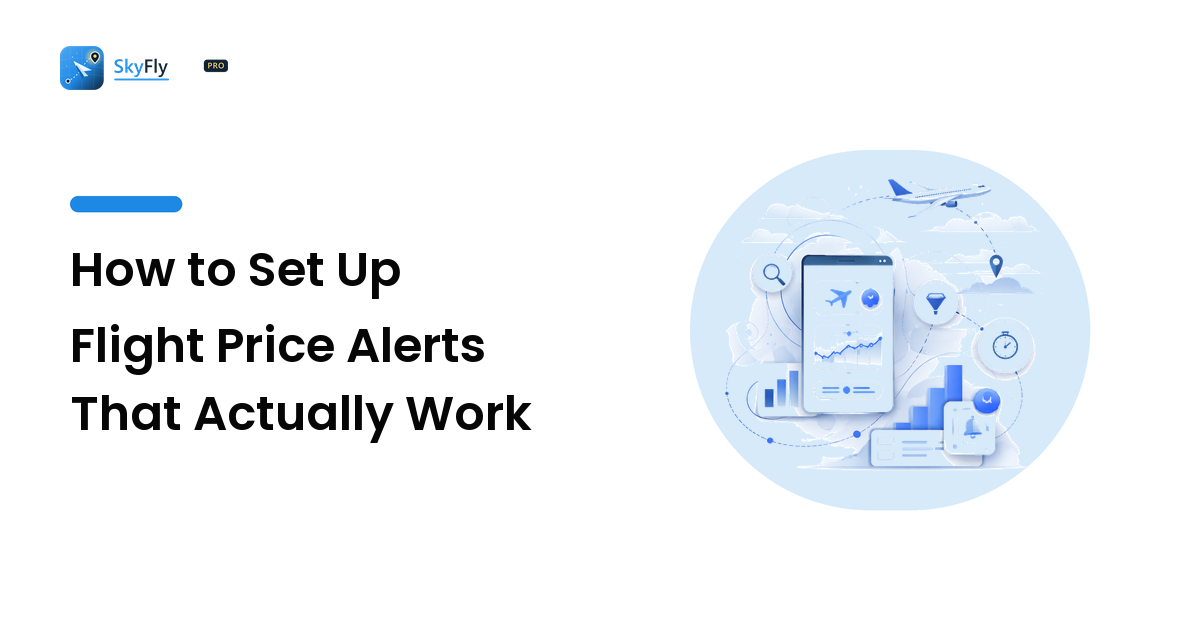
A price alert is a saved search that a tool re-runs for you on a schedule. You tell it the route, the dates or date range, and how many travelers; the service periodically re-prices that itinerary and notifies you when the number changes — usually when it falls, sometimes when it rises so you know to book before it climbs further.
Two things are worth understanding about how they work under the hood. First, most alerts track a representative fare for the route, not a locked quote — the price you're notified about is real when it's found, but airfare is live inventory, so it can move again before you check out. Second, alerts don't create deals; they surface them. The service is scanning the same fares available to everyone and telling you when one crosses a threshold. That's exactly why they're useful: they compress days of manual watching into a single, well-timed notification.
Where to set alerts up
You don't need a dozen accounts. A sensible setup uses two or three complementary sources so nothing slips through:
- A flight metasearch engine — the big comparison sites let you save a route and toggle price tracking for specific dates or a whole month. This is your workhorse for trips where you already know the where and roughly the when.
- A fare-deal newsletter or alert service — these broadcast unusually low fares and mistake fares from various origin airports. You're not tracking one trip; you're listening for a bargain good enough to build a trip around. Set your home airports so the noise stays relevant.
- The airline's own alerts — if you're loyal to one carrier or a route only they fly, their app or email list will flag sales and companion offers the metasearch tools sometimes surface later.
Vendor-neutral rule of thumb: use metasearch when the trip is fixed and you want the best price for it; use deal newsletters when the price is the point and you're flexible on where you go. Most savvy travelers run both.
The settings that separate signal from noise
An alert you ignore is worse than no alert, because it trains you to swipe notifications away. The goal is a system that stays silent until something genuinely worth your attention happens. A few settings do most of that work:
Be specific about the route, flexible about the date. If your trip has firm dates, track those exact days. If it doesn't, track a whole month or a date range — the tools will watch every departure combination and alert you to the cheapest, which is where flexibility pays off most.
Set a threshold, not a hair trigger. Many tools let you choose to hear about any change or only drops past a certain size. A fare that wobbles ten dollars isn't news. A fare that falls a meaningful chunk below what you've seen for that route is. If the tool allows a target price, set it to a number you'd actually book at.
Give it a reference point. Alerts are far more useful once you know what "cheap" looks like for your route. Note the typical price when you set the alert so a drop means something. If you're not sure what normal is, our explainer on whether flight prices really rise when you search covers how to read fare movement without spooking yourself into booking early.
Match the channel to your reaction time. Email is fine for date-flexible watching. For a hot route or a known sale window, push notifications get you there faster — and with fares, minutes occasionally matter.
When to set the alert (earlier than you think)
The best time to start tracking a fare is the moment you're reasonably sure you're taking the trip — often months out. Early alerts do two things at once: they build your sense of the route's normal price, and they catch the early-bird fares that airlines seed before demand firms up. Waiting until a few weeks before departure hands you the worst of both worlds: no price history to judge against, and a fare that's usually climbing as seats sell.
For most leisure trips, a comfortable window to have alerts running is roughly one to four months ahead for domestic routes and two to eight months for international ones. Those aren't magic numbers — they're the ranges where sales tend to appear and where you still have time to act. The alert's job is to find the good day inside that window; your job is to be ready when it does.
How to act when a good fare lands
An alert that goes off is a prompt, not a purchase. But the window can be short, so decide the hard parts before the notification arrives:
- Know your book-it number. If you set a target and the fare hits it, that's your answer — don't renegotiate with yourself while the price ticks back up.
- Verify the fare is real and complete. Open the itinerary and confirm the times, the number of stops, the airline, and whether bags and a seat are included. A cheap fare that strips out everything you need isn't the deal it looks like.
- Book promptly, then use your safety net. When the price and details check out, buy — hesitation is how good fares get away. If you're in the U.S., the 24-hour free-cancellation rule lets you lock the price and confirm the rest of the trip calmly afterward.
- Turn the alert off once you've booked. Otherwise you'll spend the next month watching the fare you already have and second-guessing a good decision.
Common mistakes that make alerts useless
- Tracking a vague dream instead of a real trip. "Somewhere warm, sometime" produces noise. Pick a route and a rough window and the alert has something to measure.
- Over-alerting. Twenty routes you'll never fly bury the two you will. Prune ruthlessly.
- No baseline. Without knowing the normal price, every alert feels urgent and none feels trustworthy.
- Treating the alert price as guaranteed. It's a live fare found at scan time. It can move — which is an argument for acting quickly, not for distrusting the tool.
- Ignoring the all-in cost. A drop on a basic fare that needs a paid bag and seat may not beat the standard fare you dismissed. Compare the total, not the sticker.
Frequently asked questions
Are flight price alerts free?
Yes — the metasearch engines, most fare-deal newsletters, and airline alert lists are free to use. Some deal services offer a paid tier that unlocks more departure airports, premium-cabin alerts, or faster notifications, but the core price-tracking that catches most savings costs nothing.
Do price alerts guarantee I'll get the lowest fare?
No. An alert surfaces a low fare when it appears, but airfare is live inventory that can rise or sell out before you book. Alerts reliably tell you when to look; they can't freeze a price. Acting promptly on a good notification is what turns the alert into an actual saving.
How many fare alerts should I set up?
As many as you have real trips, and no more. A handful of specific routes you intend to fly will serve you far better than dozens of speculative ones, which only bury the notifications that matter. Quality of targeting beats quantity every time.
Will setting alerts make prices go up?
No — creating a saved search or tracking a route doesn't push the fare higher. Alerts read prices; they don't influence them. If you've heard that repeated searching raises fares, our piece on whether prices rise when you search walks through what's actually happening.
What's the best time of day to book once an alert fires?
Book when the fare is right, not by the clock. The old advice about a magic booking hour is unreliable — sales start and end at all times. When an alert shows a price at or below your target and the itinerary checks out, that's your moment, whatever time it is.
Next step
Fare alerts reward a little setup and a clear head. Choose the routes you genuinely plan to fly, track them early enough to learn their normal price, and tune the settings so only real drops reach you. Then decide your book-it number in advance, so when the notification lands you can verify the fare and act instead of agonize. Let the tools do the watching — and put that saved attention toward planning the trip. Start your next search at skyflypro.com.